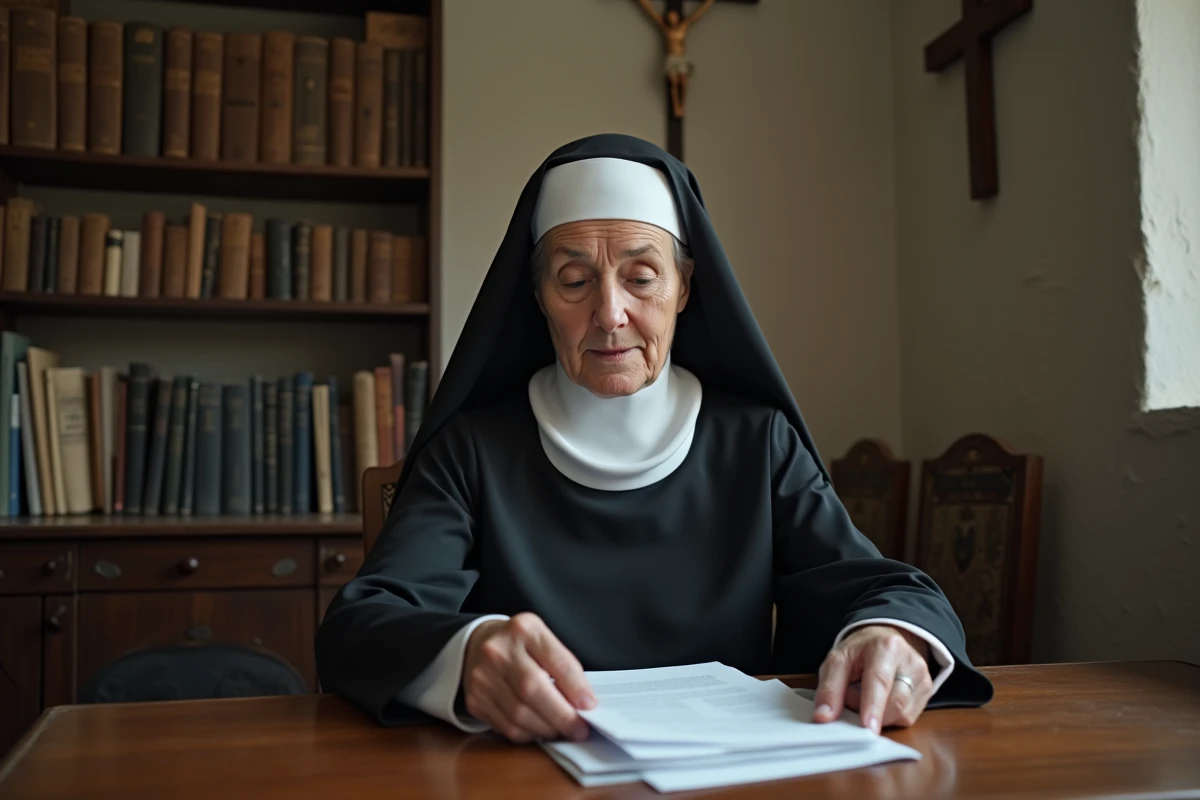
1,500 euros. This is the average salary in France, but for a nun, this figure simply has no reason to exist. Here, compensation is not counted in hard cash. Members of female religious congregations do not have a salary, neither based on age nor on experience. Their lives are not governed by a pay slip, but by trust, prayer, and solidarity. Sometimes, a symbolic allowance accompanies a mission, but nothing that resembles a traditional income. On the side of Social Security, each status, each mission, each congregation follows its own rules, a thousand miles away from the usual standards.
The journey begins well before any question of money. Several years of training await the future nun. During this time, the congregation covers the essentials, from living expenses to accommodation. Some communities require the candidate to contribute to the entry costs, while others do not. It all depends on the traditions, resources, and philosophy of the order.
Religious vocation: a lifelong commitment before any material consideration
Choosing religious life is responding to a call that far exceeds the question of finances. Joining a community is a serious commitment: service, prayer, simplicity. The vow of poverty is concrete. No private property, no personal salary that comes in every month. Each nun renounces her possessions. Daily life is built on the basis of the collective.
The rule is simple: only necessities are covered. Sometimes, a small amount of pocket money is entrusted to each sister, depending on the community’s policy. But everything else operates communally. This system of sharing, sobriety, and mutual aid structures material life: housing, meals, health, clothing, everything is provided for each member, without hierarchy of age or function.
In this context, the salary of a nun has nothing to do with the usual notion of a pay slip. When a nun works outside, in teaching, care, or craftsmanship, all of her remuneration goes back to the community. The Catholic Church, each order, each congregation, establishes this principle as the foundation of shared life: money does not accumulate; it circulates for the common good.
This model also raises questions about the place of women in the Church. On several occasions, Pope Francis has highlighted the lack of recognition for nuns, their often invisible yet vital role. During International Women’s Rights Day, conferences and discussions remind us of the weight of this commitment, in France and elsewhere. Out of the spotlight, sisters hold an essential part of ecclesial life.
What steps to become a nun? Journey, training, and concrete processes
The path to religious life is not improvised. It is rooted in an inner call, a deep desire to invest oneself within a community. Before taking the plunge, the future sister, or postulant, contacts a congregation. Often, she has already had a first professional or academic experience. A period of mutual discovery then opens up: immersion in the life of the group, discovering the rhythm, communal prayer, and shared responsibilities.
Here are the main steps of this journey, accompanied by numerous meetings and self-reflection:
- Postulancy: the first immersion. For several months, the postulant observes, participates in daily life, and tests the reality of the commitment.
- Novitiate: one or two years of training, both spiritual and practical. Under the guidance of a responsible person, the future nun deepens her understanding of the foundations of faith, the group’s rule, and begins to live without personal possessions.
- Temporary vows: after the novitiate, the sister makes commitments for a fixed period. She now fully shares community life while retaining the option to leave.
- Perpetual vows: the commitment becomes permanent. The nun publicly affirms her choice for her entire life.
Training never really stops. Thematic sessions, retreats, Bible studies: religious life is punctuated by significant moments to nourish reflection and faith. The status of each sister, whether active, contemplative, or missionary, varies according to the assigned mission and the congregation’s rule. On a material level, the community manages daily life, from finances to collective tasks, under the responsibility of the treasurer and the superior. Internal solidarity remains key, regardless of the age or role of the members.
Salary, resources, and daily life: the financial reality of nuns today
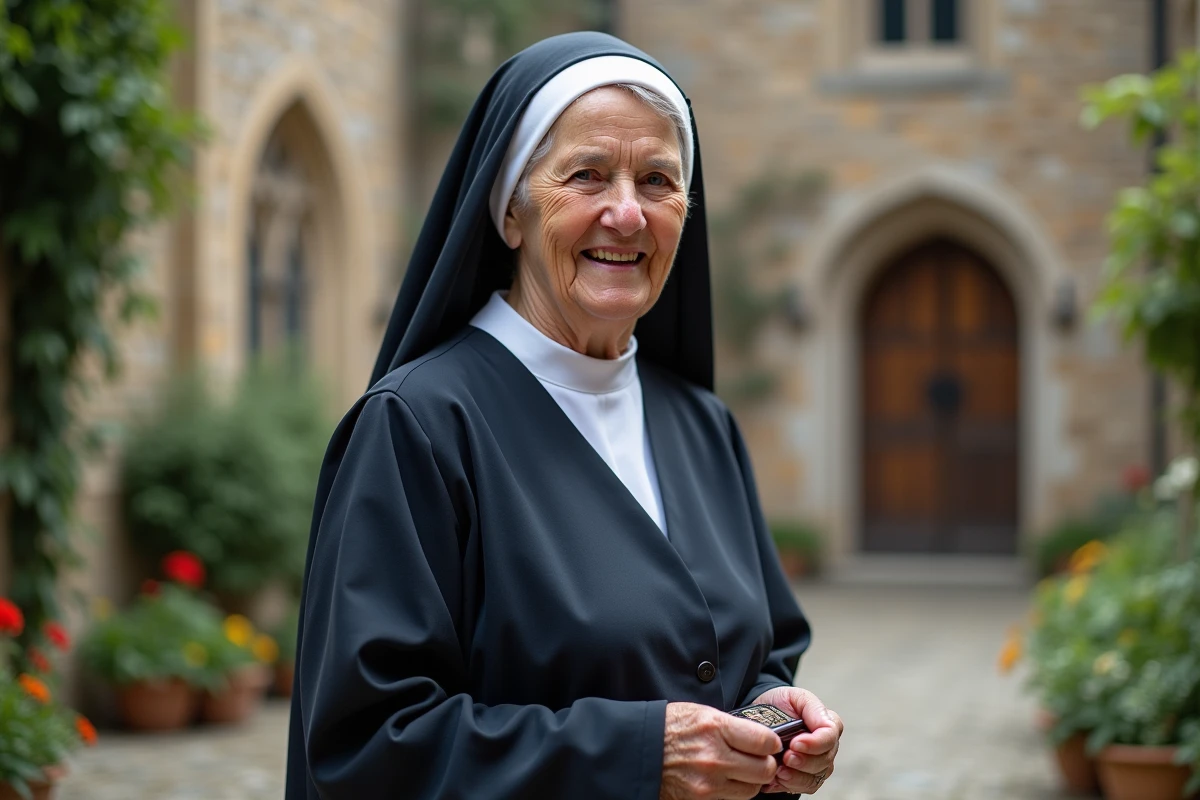
The question of a nun’s salary quickly boils down to this: there isn’t one. No individual account, no monthly transfer. The vow of poverty structures everything: every resource, every euro earned or received, is shared. Funds come from various collective sources: external professional activities (teaching, care, support), monastic craftsmanship (jams, soaps, icons), or donations from the faithful. Sometimes, the diocese also provides support.
Expenses are pooled: housing, meals, health, clothing. Each sister receives a small monthly amount, rarely more than a few dozen euros, for everyday purchases or travel. This allowance varies from one community to another and reflects the simple, unadorned life led. The provision for material needs is total and collective. Mutual aid between generations ensures that older or sick sisters are never left behind.
Regarding social protection and retirement, nuns depend on CAVIMAC, the specific regime for ministers of worship. Retirement remains modest, often below the minimum wage. But material security, the assurance of lacking nothing, relies entirely on the strength of the collective. Each gives what she can, receives according to her needs, without distinction of seniority or role.
Within these silent walls, the question of salary dissolves into another logic: that of total giving, sharing, and trust. Here, wealth is measured differently, far from numbers and accounts. A life without a pay slip, but not without value.