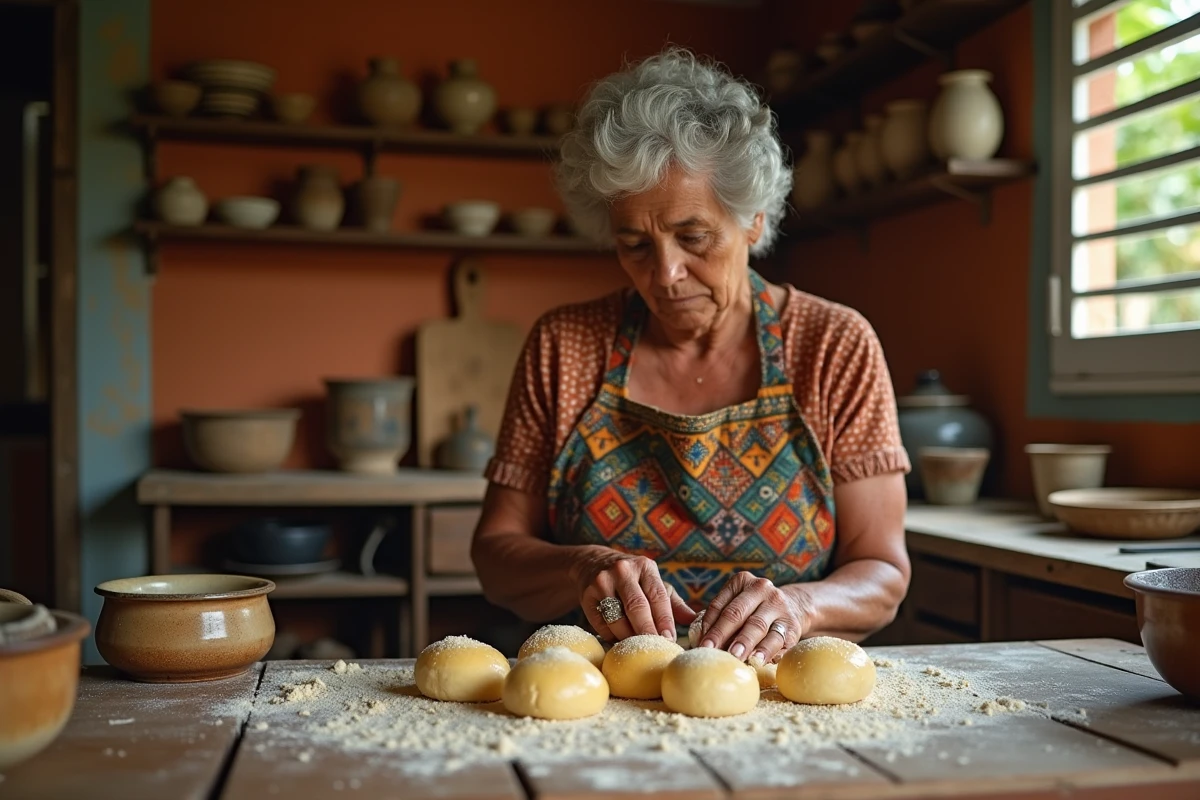
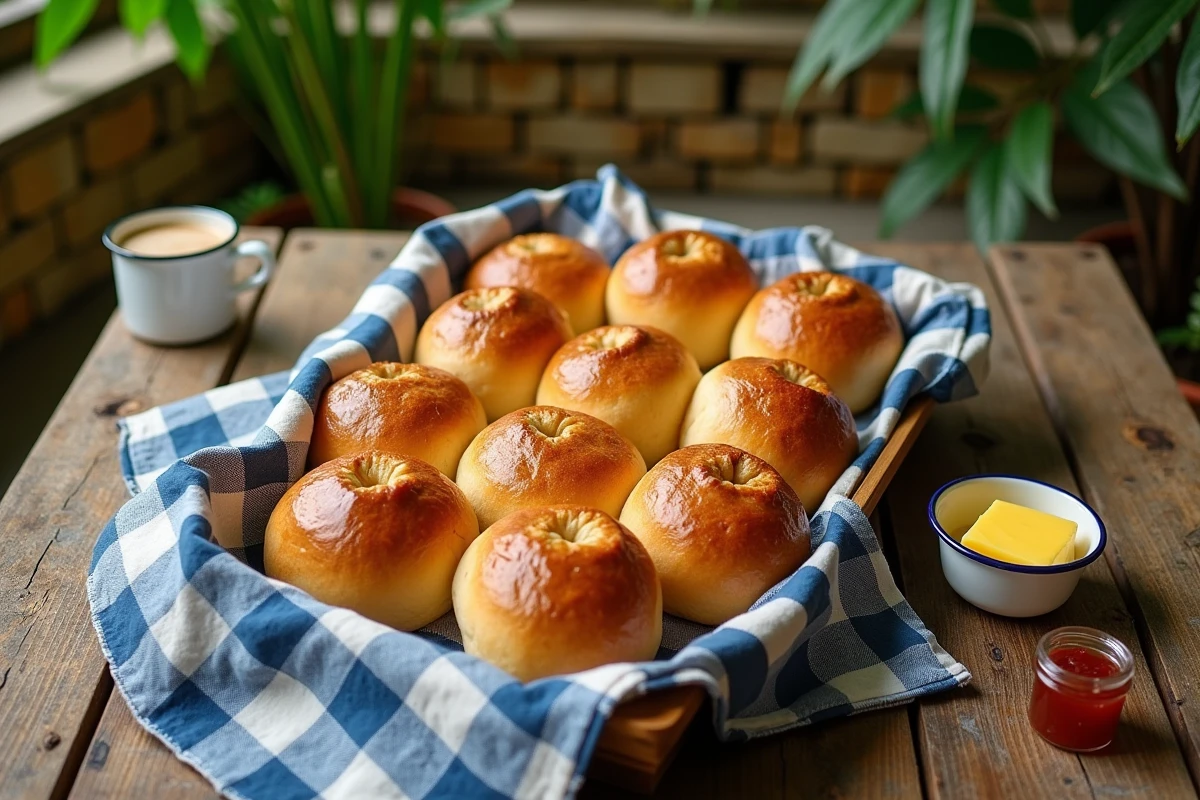
The Antillean butter bread is a brioche pastry distinguished by its soft texture and the scent of vanilla butter, setting it apart from classic hexagonal brioches. Associated with religious ceremonies and family celebrations in Martinique and Guadeloupe, this bread holds a special place in Creole culinary culture, straddling the line between ritual product and everyday indulgence.
The role of yeast and kneading in the texture of butter bread
The dough for butter bread behaves differently from Parisian brioche. The difference largely lies in the relationship between yeast, butter, and kneading time.
Baker’s yeast, dissolved in warm milk, must be activated before being incorporated into the flour. If the milk exceeds a certain temperature, the yeast dies, and the dough remains flat. Conversely, milk that is too cold slows fermentation to the point of requiring several additional hours of rising.
Prolonged kneading develops the gluten network, allowing the dough to trap the carbon dioxide produced by the yeast. It is this network that gives butter bread its stringy and airy crumb, a characteristic not found in a simple brioche. The butter, added last, coats the gluten strands without breaking them, provided it is at room temperature and incorporated in small amounts.
For those who wish to discover Antillean butter bread from a historical perspective, the kneading technique itself tells a story: it borrows from European baking methods while incorporating local flavorings, such as Bourbon vanilla or lime zest.
Antillean butter bread: ingredients and proportions that make the difference
The basic ingredients are simple: flour, butter, eggs, milk, yeast, sugar, and salt. The list resembles that of a brioche. The difference lies in the proportions and two specific additions from the Antilles.
- Butter makes up a generous portion compared to the flour, much more than in a classic bread. It is what gives the characteristic softness and rich flavor.
- Eggs provide the structure and golden color of the crust. Without them, the crumb collapses after baking.
- Vanilla (bean or extract) and sometimes citrus zest provide the aromatic signature. Some families add a hint of nutmeg or cinnamon, creating variations from one household to another.
- Warm milk, used to activate the yeast, also contributes to the dough’s flexibility. Some recipes replace part of the milk with coconut water, subtly altering the taste.
Each family has its own version, passed down orally. Feedback from the field varies on this point: some believe that the “real” butter bread contains neither eggs nor added sugar, while the majority of documented recipes include both.
The necessary equipment
A large mixing bowl, a baking sheet lined with parchment paper, and a preheated oven are sufficient. Kneading can be done by hand or with a mixer, but manual labor remains the traditional method in Antillean households. The rising time, in a warm place sheltered from drafts, usually lasts several tens of minutes, sometimes longer depending on the ambient temperature.
Baking butter bread: the mistakes that change everything
Baking is the moment when many attempts fail. An oven that is too hot burns the crust before the inside is cooked. A too gentle oven results in dry, dense bread.
Brushing with beaten egg before baking is a step that some neglect, even though it produces that shiny, slightly caramelized crust typical of successful butter bread. A second brushing halfway through baking enhances the effect.
The baking time varies depending on the size of the breads. Individual sizes (mini butter breads) bake faster than larger pieces intended for festive gatherings. The reliable test remains the tap test: a baked butter bread sounds hollow when you tap the bottom.

Creole butter bread: from family ritual to metropolitan bakeries
Antillean butter bread is historically linked to baptisms, communions, and weddings. In these contexts, it accompanies Antillean hot chocolate, served at the end of the ceremony. This association of butter bread and chocolate constitutes a social ritual in its own right, not just a simple snack.
In Guadeloupe, the association Karaïb’ Patrimoin offers a module “Butter Bread and Chocolate” in its holiday workshops on Creole culture. The oral aspect of these workshops relies on festive memories recounted by grandparents, making butter bread a vehicle for intergenerational cultural transmission.
A pastry that goes beyond festive occasions
In recent years, several Antillean bakeries and coffee shops in the Paris region have reintroduced butter bread in their displays as an everyday pastry. The bakery-pâtisserie Délices de la Caraïbe in Paris (18th) has been offering mini butter breads for breakfast and brunch since 2023, highlighting the aspect of Antillean culinary heritage.
This shift from “celebration” product to “morning coffee” product also changes the formats. Breads are sold by the piece or in individual versions, suited for quick consumption. The growing presence of butter bread outside the Antilles reflects an interest that goes beyond the diaspora, driven by social media and enthusiasm for overseas cuisines.
Antillean butter bread remains a product whose success depends as much on the technique as on the recipe. The quality of the butter, patience during the rising, and control of the baking in the oven matter more than the list of ingredients itself. This likely explains why each baker, each family, claims “their” version as the only authentic one.