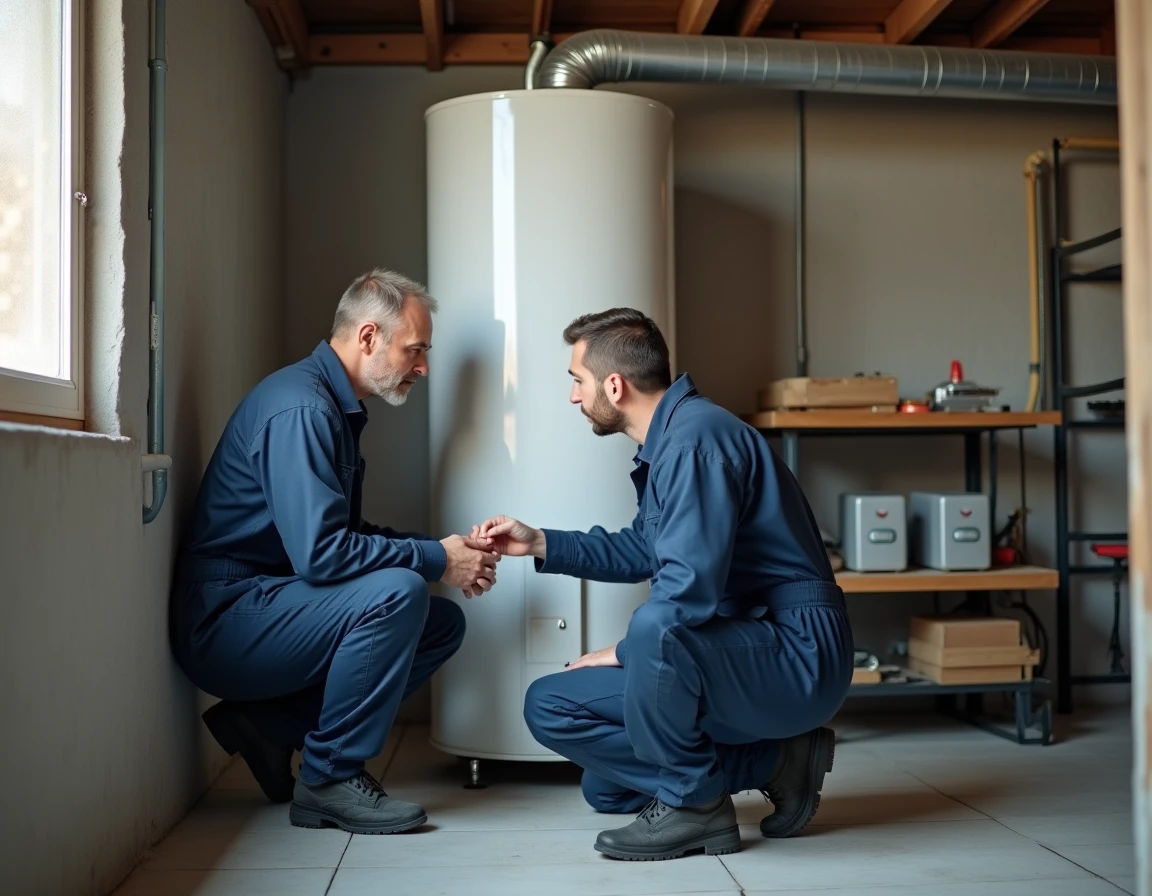
A thermodynamic water heater using ambient air captures the calories present in the air of a room to heat sanitary water via an integrated heat pump. This seemingly simple principle imposes installation constraints that the configuration of the home can make difficult to satisfy.
Room Cooling: The Trap of Well-Insulated Houses
The operation of the device relies on extracting calories from the ambient air. The room hosting it therefore loses several degrees during each heating cycle. In an old house with a poorly insulated garage or pantry, this drop in temperature often goes unnoticed.
In very well-insulated recent constructions, the situation changes. The cooling generated partially offsets the gains from the main heating, which causes the heating system to consume more to maintain comfort. Installers report that this compensation is often underestimated during the initial sizing.
Before installing a thermodynamic water heater using ambient air, it is necessary to assess whether the hosting room is thermally decoupled from the rest of the home. An unheated room that has little communication with the living areas (closed garage, laundry room with an insulated door) limits this unwanted cold transfer.
Volume of the Installation Room and Air Circulation
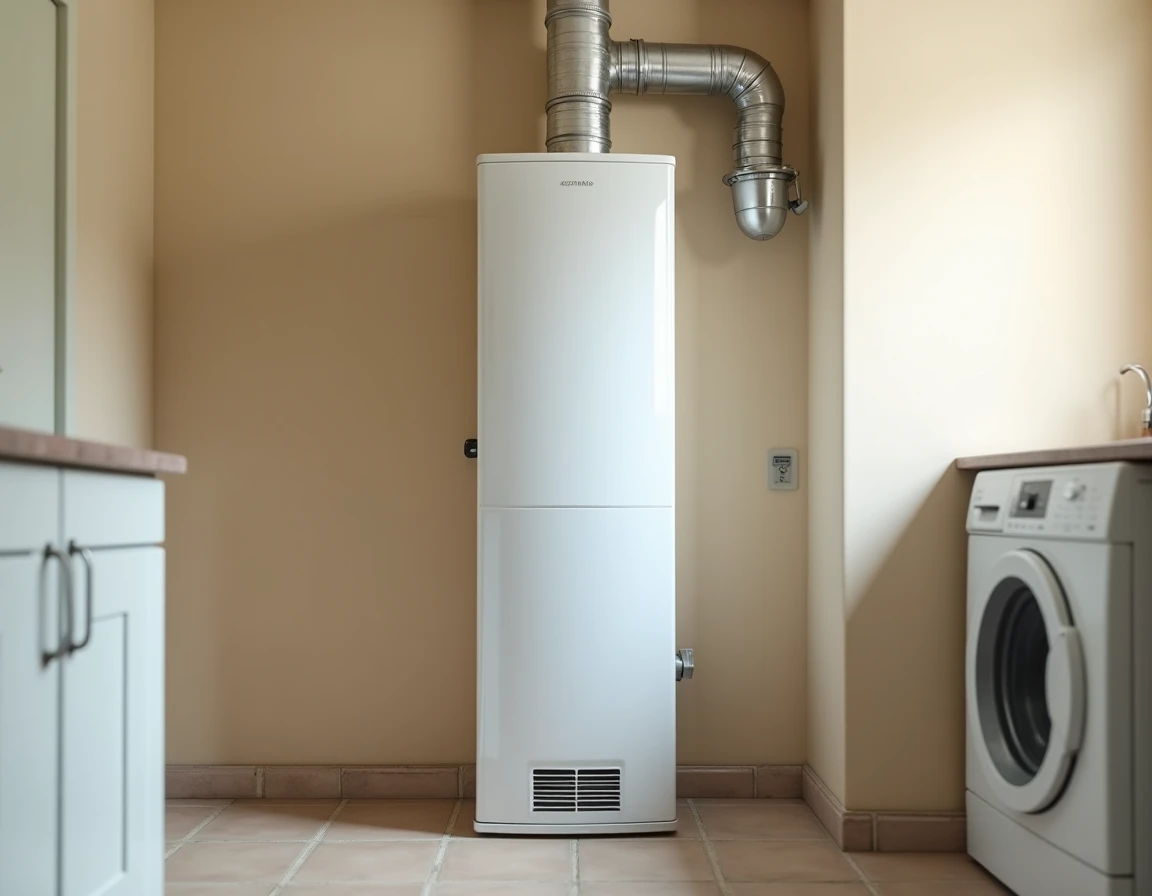
The heat pump integrated into the thermodynamic tank requires a sufficient volume of air to operate correctly. Manufacturers generally require a room of at least 20 m3, which corresponds to a space of about 8 m2 with standard ceiling height.
Installing the device in a closet or too small a space degrades efficiency. The heat pump runs in a loop on already cooled air, which lengthens heating cycles and puts a strain on the auxiliary electric resistance. The energy gain compared to a traditional water heater then becomes marginal.
- The room must remain unheated or lightly heated to avoid wasting the energy from the main heating for the production of hot water.
- The rejected air (cooled by several degrees) must be able to renew itself, either through natural openings or through a duct system to the outside.
- No obstruction should hinder the intake and exhaust of air from the device, which imposes a minimum clearance around the tank.
In an apartment, these constraints of volume and air circulation make installation using ambient air significantly more complicated than in a single-family home.
Noise Disturbances from the Operating Thermodynamic Water Heater
The integrated heat pump produces noise comparable to that of a refrigerator, but over longer cycles and at sometimes poorly chosen times (nighttime off-peak hours). The noise level becomes problematic when the room is adjacent to a bedroom or a living room.
In a single-family home, placing the tank in a garage or basement mitigates the issue. In an apartment, the propagation of noise through walls and floors can affect the housing itself and neighbors. Some co-ownerships even require prior approval before any installation.
Checking the noise level reported by the manufacturer is not enough. Reverberation in a small tiled room amplifies the perception of noise. Planning for anti-vibration support and positioning away from lightweight partitions reduces the transmission of vibrations to the structure.
Financial Aid: Scales Favoring Other Technologies

Public aid for energy renovation exists for thermodynamic water heaters, but some local authorities direct their grants towards models using extracted air or outside air. These technologies, connected to a mechanical ventilation system or capturing outside air, are considered more efficient over the year in very insulated homes.
This hierarchy in the aid scales directly influences the profitability of an ambient air water heater. The purchase cost of the device remains similar from one technology to another, but the subsidy gap can change the payback time by several years.
Before finalizing the choice of model, consulting local scales (metropolitan, departmental, regional) helps identify whether the ambient air water heater remains eligible for the same amounts as other thermodynamic variants.
Co-ownership and Transition to a Collective Solution
In collective buildings, another parameter comes into play. France Chaleur Urbaine emphasizes that thermodynamic water heaters using extracted air fit into a logic of overall optimization of the building, compatible with a future connection to a collective heat pump or a heat network.
Installing an ambient air water heater in an individual unit within a co-ownership that is considering a collective solution in the medium term can become a hindrance. The cluttered technical room, difficult-to-alter air circuits, and quickly obsolete investment pose a problem of property coherence.
Before purchasing, inquiring with the property manager about the building’s energy projects avoids financing equipment whose useful life will be shortened. A thermodynamic water heater has a lifespan that justifies checking the energy trajectory of the building over the same time scale.
The thermodynamic water heater using ambient air remains a relevant solution for reducing consumption related to hot sanitary water, provided that the hosting room, the insulation of the home, and the context of co-ownership are compatible with its operational requirements. Checking local aid scales before signing a quote remains the most cost-effective reflex.