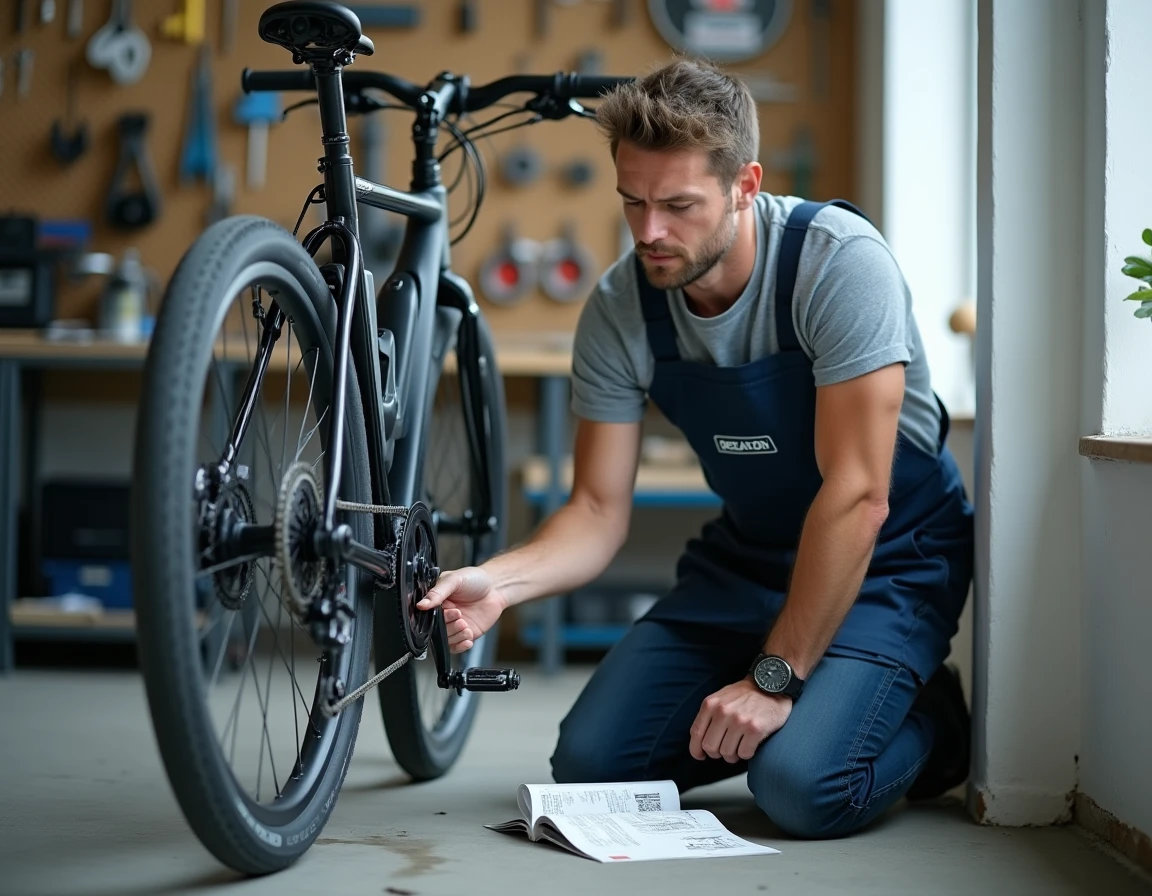
An electric bike from Decathlon that refuses to turn on, a battery that loses autonomy for no apparent reason, or a motor that cuts out during exertion: these issues affect all models of electric bikes, from Riverside to B’Twin. Before heading to the workshop, a methodical diagnosis often helps identify the cause and, in some cases, allows you to fix the problem yourself.
Dependency on components and software ecosystem: what determines the repairability of a Decathlon electric bike
The mechanical robustness of an electric bike does not guarantee its long-term repairability. An electric bike relies on a set of electronic components (controller, sensor, display) whose availability varies depending on the series and suppliers. When a model is discontinued, the availability of critical parts becomes the real limiting factor.
Decathlon offers a spare parts pathway through its Support platform, but certain elements, particularly batteries and controllers specific to a particular model year, can become difficult to source after a few years. Similar cases have been documented with other electric bike brands that have ceased operations, where owners find themselves with a mechanically sound bike but electrically irreparable due to a lack of compatible battery or an inactive diagnostic server.
For those looking to resolve an issue with a Decathlon electric bike, the first step is to check the exact model reference and the compatibility of parts still in stock before any intervention.
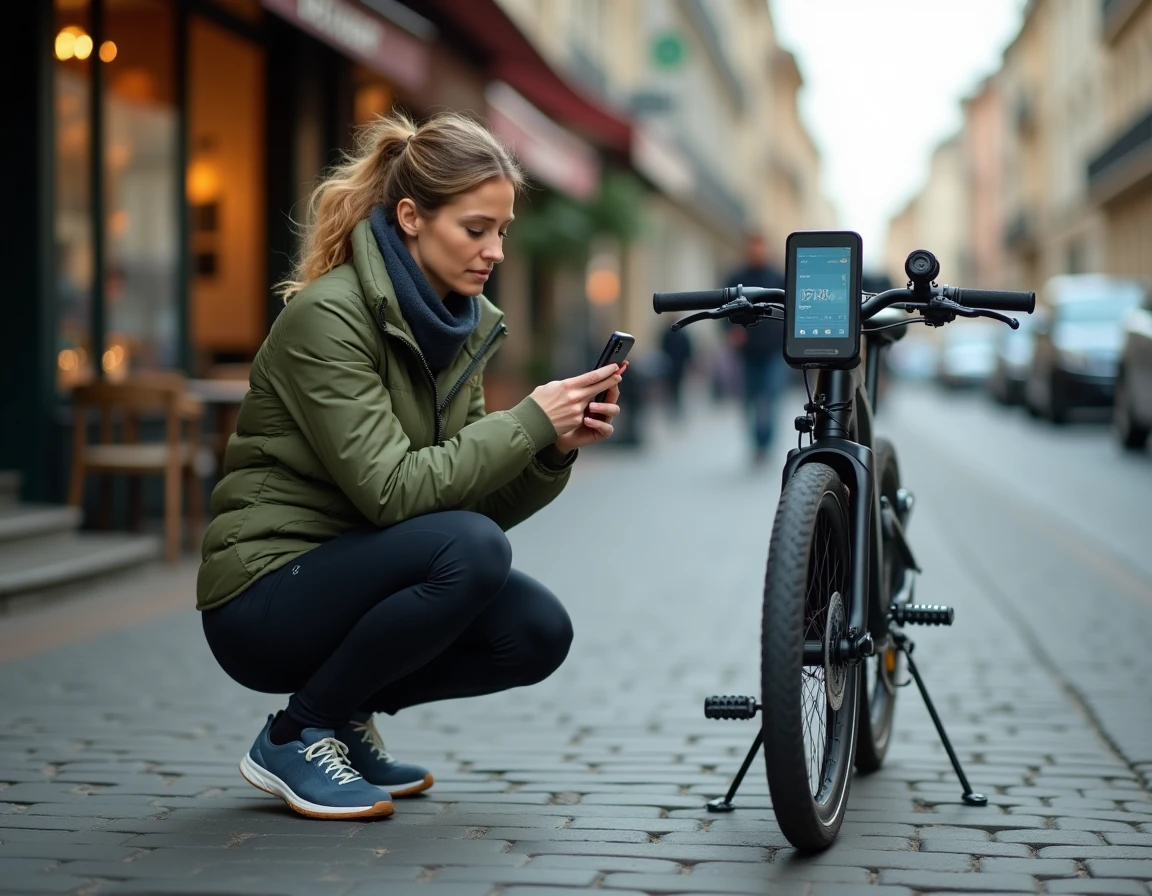
Diagnosing an electric assistance problem: torque sensor or pedal sensor
Not all Decathlon electric bikes measure the cyclist’s effort in the same way. The distinction between torque sensor and pedal sensor determines the type of failure and the diagnostic method.
A pedal sensor (or Hall effect sensor) simply detects the rotation of the crankset. It activates the assistance as soon as the pedals turn, without modulating the power based on the actual effort. When this sensor malfunctions, the assistance may cut out abruptly or never engage at all.
A torque sensor, found on newer models, measures the pressure applied to the pedals and adjusts the motor power in real time. Its failure manifests differently: the assistance remains active but becomes erratic, or the assistance mode seems stuck at a single level.
Checks accessible without specialized tools
- Visually inspect the wiring between the sensor (located at the crankset) and the controller, looking for a loose connector or a wire pinched by the frame
- Check that the magnet of the pedal sensor (small disk attached to the axle) is still in place and properly aligned with the detector
- Reset the system by disconnecting the battery for about ten minutes, then reconnecting it before turning on the display
- Consult the error codes displayed on the console: each code corresponds to a specific component (motor, battery, sensor), and these codes are documented in the manuals available on Decathlon Support
A persistent error code after resetting usually points to a component that needs to be replaced, not just a simple connection issue.
Battery and charger: the most common failures on an electric bike
The battery accounts for the majority of problems reported by users of electric bikes. A gradual loss of autonomy is normal over several years of use. However, a battery that no longer charges at all or discharges within a few kilometers indicates a more serious malfunction.
Before blaming the battery itself, the charger should be tested. A faulty charger can simulate a battery failure: the charging light remains fixed or does not turn on, and the output voltage never reaches the required level. Testing the charger on another compatible battery, or measuring its voltage with a multimeter, allows for quick elimination of this hypothesis.
When the battery is truly at fault
If the charger works correctly, the problem lies with the internal cells of the battery or the BMS (Battery Management System), the integrated protection circuit. A defective BMS can block charging or discharging even if the cells are still viable.
Replacing an electric bike battery remains the most significant expense. Some local authorities offer repair or component replacement assistance for electric bikes, a program still little known but that can significantly reduce costs. Inquiring with your town hall or local authority before purchasing a new battery can be worthwhile.
Decathlon workshop or independent repairer: criteria for choosing the repair of an electric bike
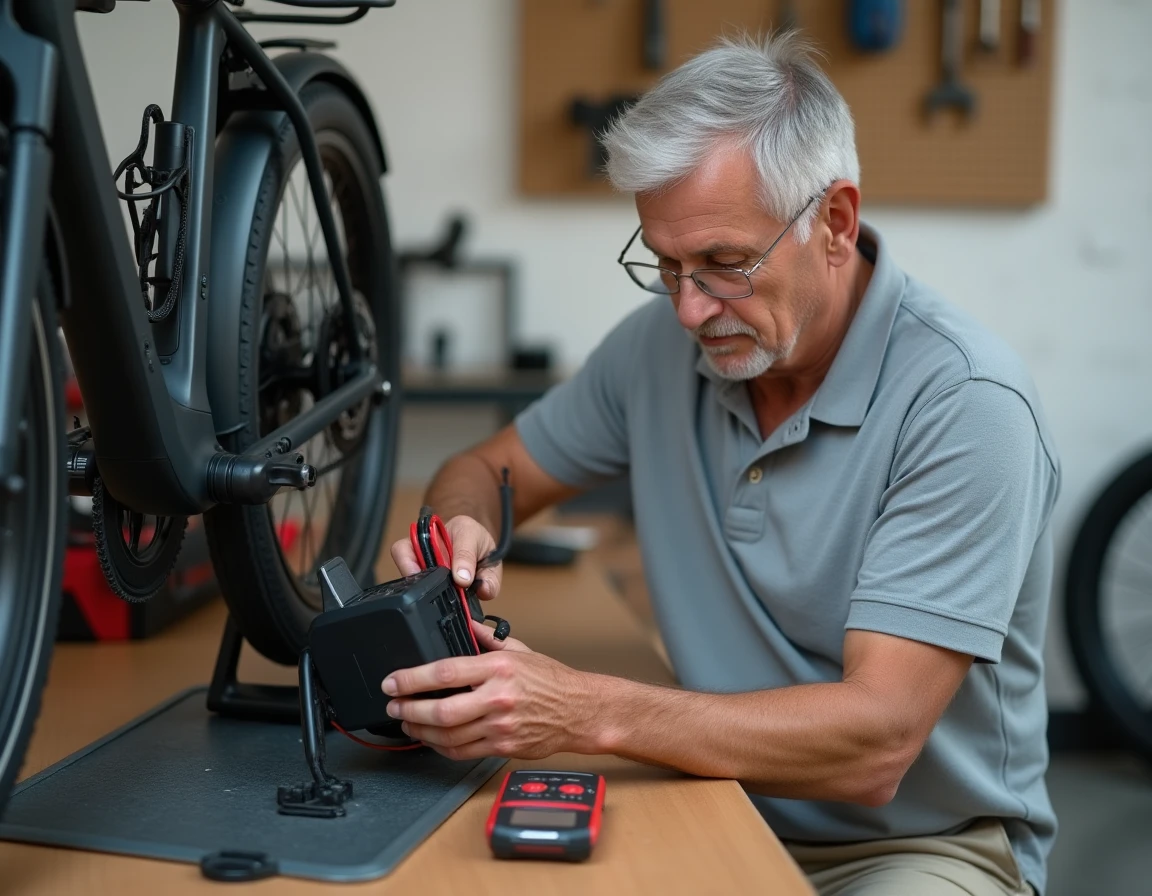
Decathlon in-store workshops handle common repairs (brakes, transmission, tires) and some interventions on the electrical system. Field feedback varies on this point: the capacity for electronic diagnostics varies from one workshop to another, and failures related to the controller or BMS are sometimes redirected to centralized customer service, which extends the waiting times.
An independent repairer specializing in electric bikes often has more advanced diagnostic tools (cell-by-cell voltage reading, controller reprogramming). The hourly rate is generally higher, but the intervention may be more targeted.
- For a classic mechanical failure (brakes, derailleur, wheel misalignment), the Decathlon workshop remains the most straightforward choice, especially if the bike is still under warranty
- For a recurring electronic issue or an unresolved error code after a workshop visit, an independent electric bike specialist provides a second level of diagnosis
- For a battery replacement on an older model, first check the availability of the part with Decathlon before looking for a compatible battery from a third party
The manufacturer’s warranty covers defects in the electrical system for two years. Any intervention by an unauthorized repairer may, according to the general conditions, invalidate this coverage. Checking warranty status before any opening of the electrical system remains the most basic precaution, and the most often forgotten.