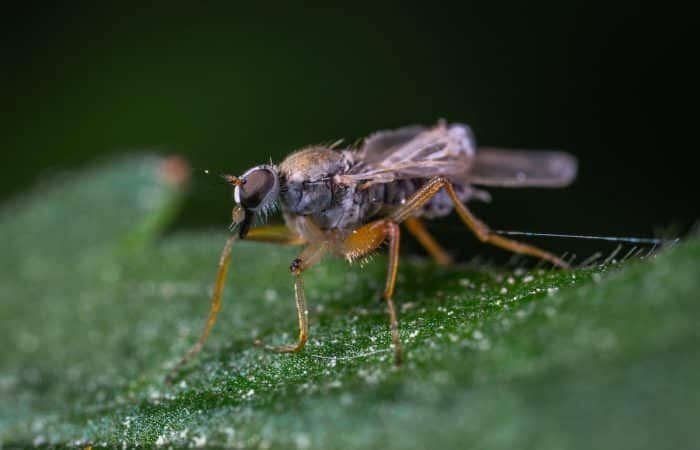
In the contemporary world, the fight against fly larvae has shifted towards more ecological and environmentally friendly solutions. In this context, it is crucial to understand the different natural approaches that can be used to eradicate these pests. These proven methods vary, ranging from the use of natural predators and biological traps to the application of homemade solutions. An overview of these techniques offers a refreshing perspective on how to manage this nuisance without resorting to harmful chemical pesticides.
Fly larvae: a common problem to solve
Understanding the life cycle of flies is essential if you want to implement an effective strategy to eradicate fly larvae in the home. The progression of a fly’s life cycle can vary, but it generally consists of four main stages: egg, larva, pupa, and adult.
The first phase begins when the female lays her eggs in a moist and nutrient-rich environment, such as garbage or decaying food. These areas represent the ideal place not only for the eggs to develop quickly (sometimes in less than 24 hours) but also to provide newly hatched larvae with an abundant food source.
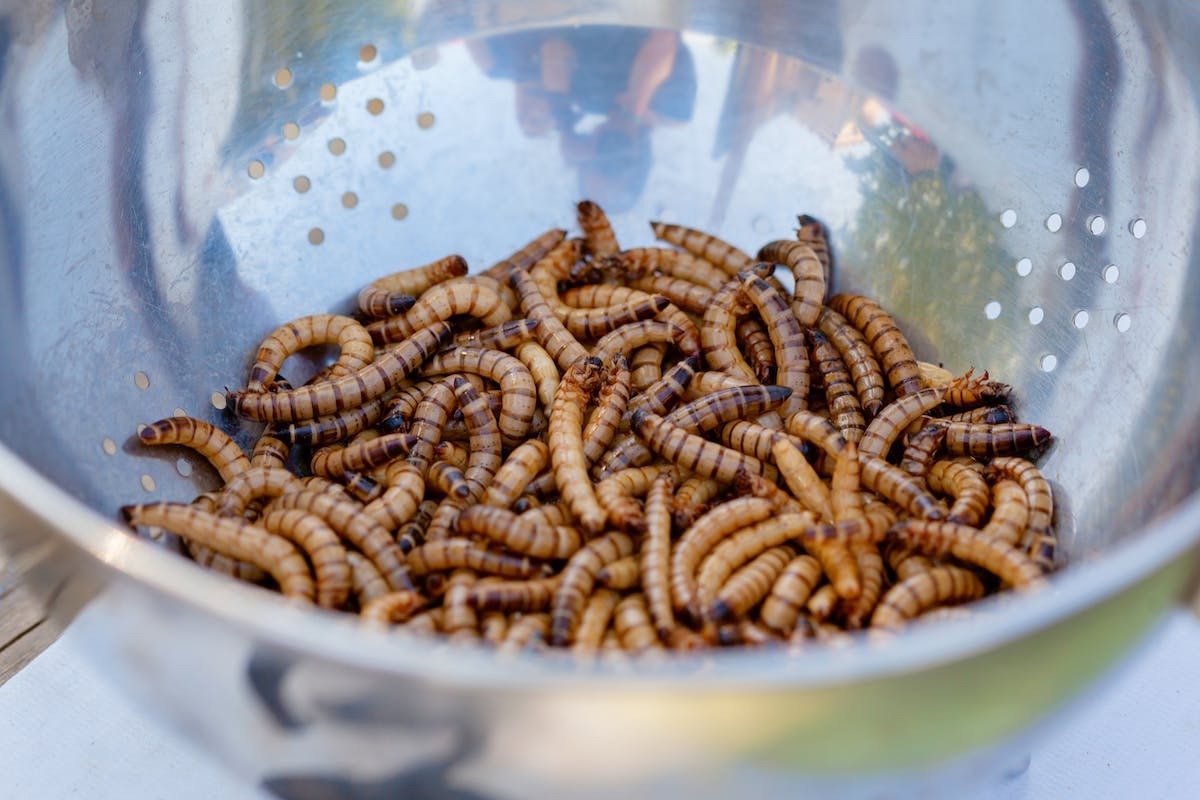
This is where the precise term ‘house fly larva’ comes into play. Following the hatching of the eggs, these small whitish creatures resembling worms begin their feast. The larvae go through several stages over a period of up to two weeks before reaching their next developmental stage • the pupal form.
In this third stage of the evolutionary cycle called ‘pupa’, they finally metamorphose into adult flies ready to fly. During this morphological transformation, which can take between three days and a week depending on environmental conditions, the pupa does not eat at all and remains motionless.
Once they reach the final stage of the cycle • that is, the adult insect stage -, they are capable of reproducing, thus giving rise to a new potentially harmful generation. The total duration from egg to adult varies with each specific species and can be influenced by various external factors such as ambient temperature or the nutritional level available to support their rapid development.
Knowing this process not only allows diligent homeowners to understand why they are constantly dealing with this unpleasant insect despite their ongoing efforts to get rid of it, but it also provides crucial information on when to intervene exactly to prevent its future proliferation.
So, how to proceed? There are different natural methods that actively help in your fight against fly larvae in the home without resorting to the dreaded harmful chemical pesticides.
Life cycle of flies: understanding to act better
In the fight against fly larvae, the use of natural repellents is an effective and environmentally friendly method. These alternative solutions help keep these unwanted pests away without resorting to potentially harmful chemical substances for health.
Peppermint essential oil: Mint has a powerful scent that repels flies. Dilute a few drops of peppermint essential oil in a spray bottle filled with water and spray the mixture in areas infested with larvae. Repeat this operation daily to maintain its repellent action.
White vinegar: This versatile product found easily in our kitchens is also very effective as a repellent against fly larvae. Mix equal parts of warm water and white vinegar, then spray this mixture on all surfaces that may harbor these unwanted insects.
Cloves: These small cloves have a powerful repellent effect due to their characteristic odor, which strongly disturbs developing flies. Simply place a few cloves in fabric sachets or directly in your trash bins to prevent any appearance or reproduction of the larvae.
Specific plantings: Certain plantings can be very useful for naturally repelling these flying pests as well as their larvae. Planting basil, lavender, or geranium near infested areas can greatly help eliminate them.
Regular cleaning: Strict hygiene is essential in the fight against fly larvae. Be sure to thoroughly clean all surfaces that may harbor these unwanted insects with a natural disinfectant solution such as water and black soap.
It should be noted that there are different species of flies, each with its own ecological and environmental preferences. Therefore, it may be wise to use several methods in combination to achieve optimal results.
Natural repellents are a safe and respectful alternative that effectively keeps fly larvae away without resorting to aggressive chemical products. By using these methods, you can maintain a healthy environment free from harmful insecticides while clearing your home of unwanted invasive larvae.
Natural repellents: a solution to keep flies away
In our quest to eradicate fly larvae, method 2 involves cleaning and maintaining the areas prone to infestation. By adopting a proactive approach, you can effectively prevent the appearance and proliferation of these unwanted insectoids.
A crucial step in this process is to keep a clean and well-maintained environment. Flies are attracted to decomposing organic waste such as food scraps, manure, or animal feces. Therefore, it is essential to ensure that these substances are not accessible to flies.
Cleaning and maintenance: preventing fly larvae infestation
If despite your preventive efforts, you find that fly larvae are still present, another effective method to get rid of them is the use of ecological traps. These devices allow you to attract and capture adult flies to interrupt their reproductive cycle.
There are different options for making your own ecological trap at home. One of the simplest is to use a glass jar or a similar container. Fill it with an attractive bait such as apple cider vinegar mixed with a few drops of dish soap. The flies will be attracted by the enticing smell and will find themselves trapped in the container.
A popular alternative is the fruit trap, which works particularly well if you are dealing with fruit flies. Take a piece of ripe fruit and place it in a shallow bowl or plate filled with slightly soapy water. Cover it all with clear plastic wrap, piercing a few small holes in it to allow the insects to enter but making it difficult for them to escape.
Some manufacturers also offer ready-to-use traps on the market that use various mechanisms to attract and capture flies, without any harmful chemicals or danger to the environment.
Whatever type of trap you choose, be sure to place these devices in areas where you have observed a strong presence of flies. You can also increase their effectiveness by combining them with other natural methods, such as using repellent plants or setting up screens to prevent flies from entering your space.
It should be noted that using ecological traps requires a bit of patience and perseverance. It may take a few days before you start seeing significant results. Once the number of captured flies gradually decreases, you will know that your strategy is working.
There are several natural methods to effectively eliminate fly larvae without harming the environment. From prevention through meticulous cleaning and maintenance of sensitive areas to cleverly used ecological traps, it is possible to avoid these unwanted flying nuisances while preserving our fragile ecosystem. Now it’s your turn to experiment with these solutions and adapt those that best suit your particular situation.
Ecological traps: an alternative for trapping flies
For effective fly larvae control, consider natural methods. The first step is to prevent the appearance of flies by maintaining a clean and hygienic environment. This involves regularly cleaning food waste and humid areas conducive to fly reproduction.
Alongside this, the use of natural repellents can also be beneficial. Certain plants such as lavender or mint are known to repel flying insects, including flies.
If despite all these preventive measures you are faced with a fly larvae infestation, various methods can be used. One of them is to use white vinegar poured down the drains to eliminate any eggs present. Vinegar also has the advantage of being non-toxic and environmentally friendly.
Another option is to use ecological traps such as jars filled with an attractive bait, like apple cider vinegar mixed with a few drops of dish soap, or the famous homemade fruit trap.
It is crucial to emphasize that each situation is unique, and it may be necessary to experiment with different combinations before finding the one that works best in your particular case.
Also consider using liquid or spray products specifically designed to eliminate flies. It is recommended to favor products with natural and environmentally friendly compositions.
By adopting a holistic approach and combining different natural methods, you can effectively control fly larvae without harming the surrounding ecosystem. This not only helps avoid unwanted flying nuisances but also preserves our fragile ecological balance.
So don’t hesitate to put these tips and solutions into practice in your fight against fly larvae.
Effective fly larvae control: a necessary holistic approach
Beyond the preventive and curative methods mentioned earlier, there are other natural techniques to effectively eliminate fly larvae. One of them is the use of beneficial nematodes.
Beneficial nematodes are microscopic worms that feed on fly larvae present in the soil. They can be introduced into your garden or vegetable patch to combat these pests. Simply dilute the nematodes in water and water the infested areas. The nematodes then spread naturally and attack the larvae present.
Another interesting method is to use coarse sand or fine gravel at the level of planting pots or around areas conducive to fly reproduction such as trash bins. Indeed, these materials prevent adult insects from laying their eggs in the moist soil by creating a physical barrier.
For those seeking a more radical alternative, it is possible to use a vacuum cleaner with a narrow nozzle to directly capture adult flies as well as their larvae on all accessible surfaces. This method allows for immediate mechanical elimination while avoiding the use of potentially harmful chemicals for human and animal health.
Let’s not forget the crucial importance of respecting the natural biological cycle when it comes to sustainably eliminating these unwanted pests.